Jonathan Blow and Auteurs In Games
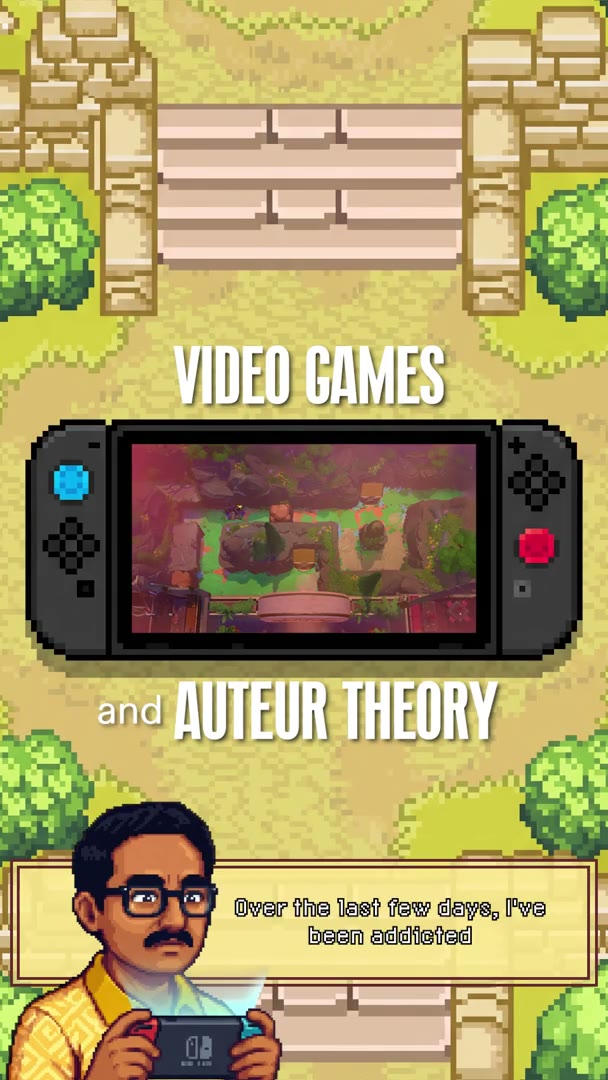
Over the last few days I’ve been addicted to a new puzzle game, and I don’t even like puzzle games!
This is Order of the Sinking Star, released a few days ago by Jonathan Blow and his team at Thekla.
I’m playing it because of Jonathan Blow.
He spent the last ten years making this game. After Braid and The Witness, he went somewhere stranger. He built his own programming language, Jai. Then, to test it, his own engine. Then the game.
I first came across Jonathan on his streams, where he’d share opinionated, eclectic views on everything from game design to programming languages to Gravity’s Rainbow.
This was a philosopher-designer.
And it reminded me of the Auteur Theory, and whether it exists in games.
The theory came from French critics at Cahiers du Cinéma in the 1950s. It says the director is the major creative force behind a film. It’s why we say a Scorsese film, a Nolan film, a Spielberg film.
Does it apply to video games?
In a sense it does. Mario was the brainchild of Shigeru Miyamoto, Metal Gear of Hideo Kojima, and Dark Souls came from the twisted mind of Hidetaka Miyazaki…
And funnily enough, Electronic Arts was founded on this notion too!
When Trip Hawkins left Apple in 1982, he’d been dreaming of his own game company for ten years.
Trip wanted to treat his designers like film directors, and EA would become “an association of electronic artists.”
He wanted auteurs, and he got ‘em, signing Bill Budge, the maker of Pinball Construction Set, as one of his earliest designers.
And Trip sold the game like a record: an album-style sleeve with Bill’s name on the cover and his portrait inside.
I may not fully agree with the auteur theory, but there’s a small joy in believing people buy things because they’re interested in someone’s mind, and what comes out of it.
There’s something lovely in that idea.