Early UI and Pinball Construction Set
Transcript
The Sims exists because of a pinball game.
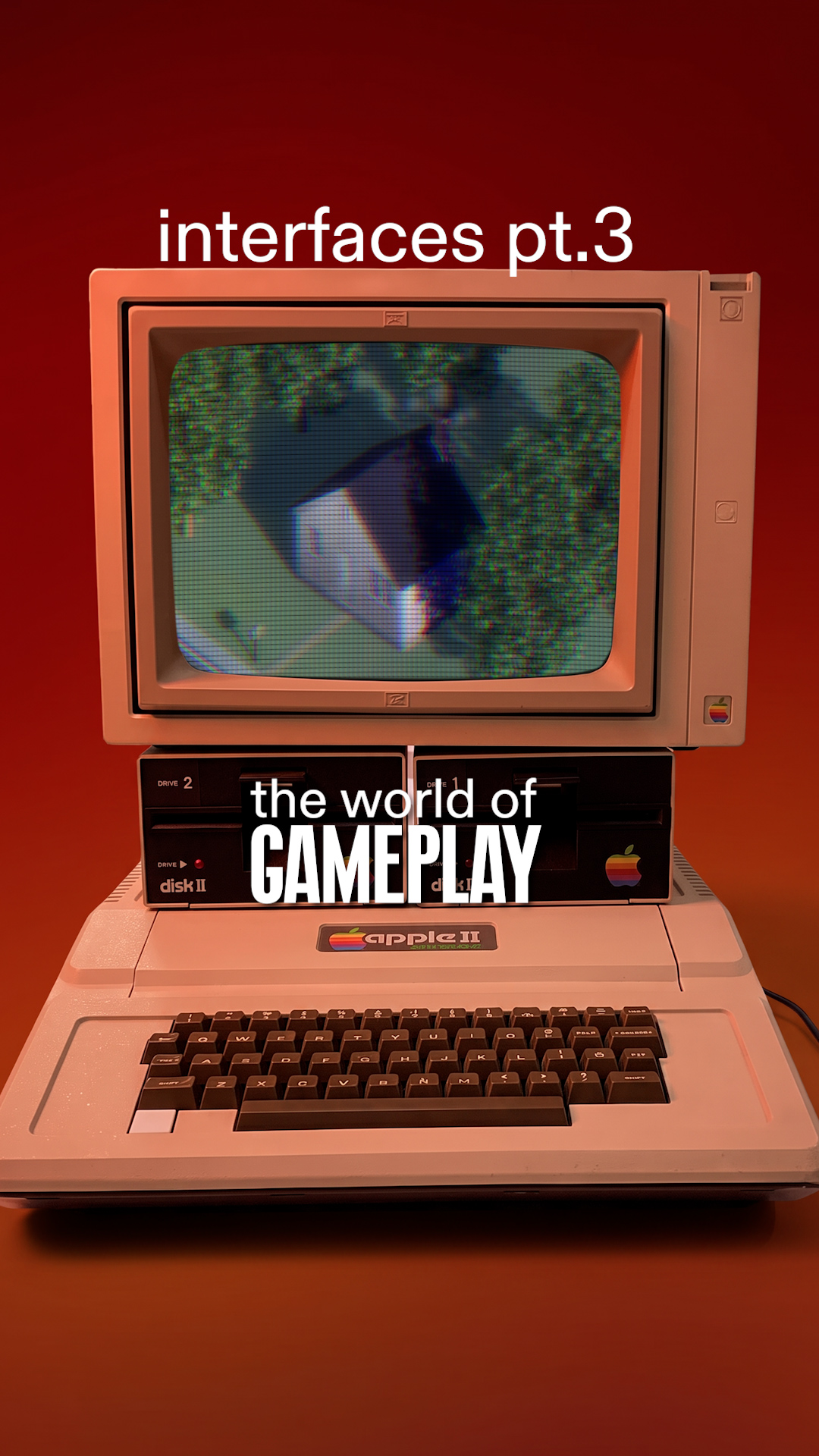
This is ‘Pinball Construction Set’. Released in 1982 for the Apple II. See that weird floating hand? That’s your cursor. You grab bumpers, flippers, spinners — and just drop them on the table.
Bill Budge, the guy who made it, had seen the Lisa project at Apple — so he gave this game a Mac-like interface two years before the Mac existed.
And the most interesting part was that Bill hated pinball! He was working at Apple and his colleagues, flush with post-IPO money, were obsessed with pinball machines.
Inspired by their enthusiasm, he first built Raster Blaster, which sold so well that he quit, and decided to make another one.
This time, he actually bought a machine, disassembled it, and tried to build a simulation of it in code.
Since Lisa’s interface used a desktop as its metaphor, his program would let the user build a pinball machine from spare parts.
The interface encouraged customization. Users could drag and drop fifteen different components, alter gravity to affect the ball, and make custom scoring combinations.
And Budge accomplished all of this, and in just 48 K of memory, which is insane. Steve Wozniak has called it “the greatest program ever written for an 8-bit machine.”
And years later Will Wright would cite Pinball Construction Set as a key influence for his design choices in SimCity and later The Sims.
Even Orson Scott Card, writing for Compute Magazine, would praise the game’s versatility, since it allowed his son to embrace creative play.
So the interface wasn’t the point. It’s what the interface allows you to do, to express your own creative vision, that makes it most interesting.
Readings
- The Ultimate History of Video Games (2001)
- Replay: The History of Video Games (Ch. 11)
- My Perfect Console, Ep. 175: Soren Johnson (Aug 25, 2026)
- The History of the Pinball Construction Set: Launching Millions of Creative Possibilities
- Halcyon Days: Bill Budge interview
- Pinball Construction Set
- InfoWorld, Jan 9–16, 1984 (p. 69)
- Pinball Construction Set: Build your own pinball game on an Apple II, Atari 400/800/1200, or Commodore 64 (BYTE, Jan 1984, p. 282)
- Gameplay: You've Made Your Game — Now Play in It (Compute!, Jan 1989, p. 12)
- Bill Budge, Pinball Construction Set, and the Popularization of User-Customized Video Games (2012)
- The Pinball Wizard (2013)
- Graphic icon sketch (1982–1983)
- The Integrated Software and Hardware of the Apple Lisa (1984)
- Academy of Interactive Arts & Sciences Names Bill Budge as Its Second Pioneer Award Recipient (Jan 21, 2011)