Anthropic and Wargaming
Transcript
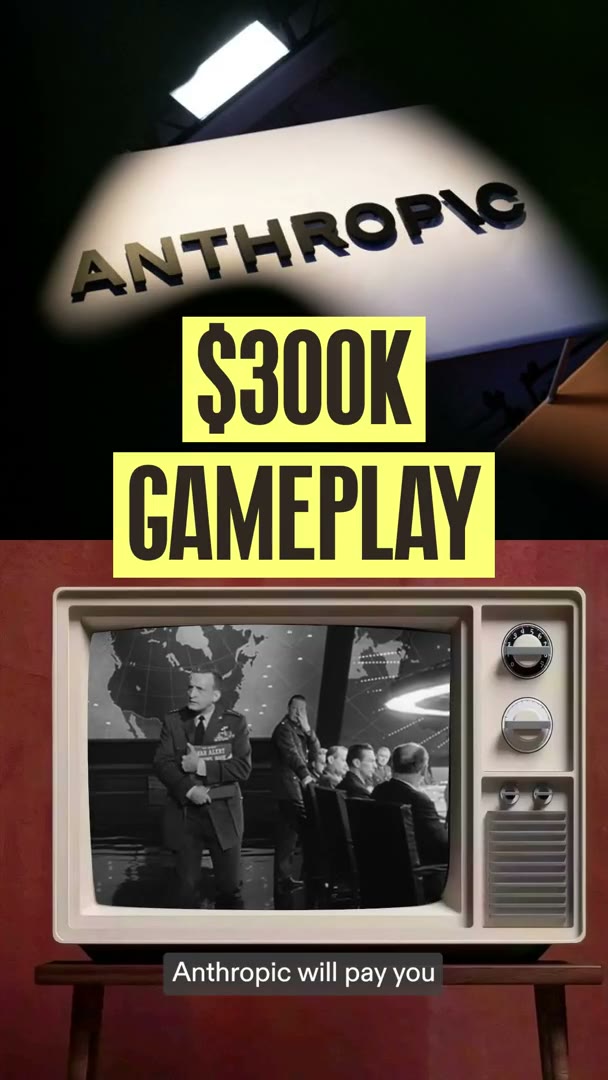
Anthropic will pay you almost $300k to play pretend. And the idea comes straight out of the 1950s.
A few days ago, Anthropic posted a job for a Tabletop Exercise Lead. It sits inside The Anthropic Institute, next to teams like the Frontier Red Team, Societal Impacts, Economic Research and Rule of Law.
Your job? Build its tabletop exercise program.
Anthropic says if RSI arrives, the hardest problems will be decisions under uncertainty, made by people who may not trust each other. So you practice before it’s real.
This isn’t new. In the 1950s, RAND started running political games, rehearsing Cold War crises around a table.
In 1961, Robert McNamara brought RAND’s Whiz Kids into the Pentagon to overhaul it. As he later put it, in a nuclear world there’s no learning period. The only time to plan is now.
These games have ramped up as geopolitical uncertainty has grown. The Marines just joined an international wargaming conference, and groups like the AI Futures Project run their own.
VC firm Lux Capital even built a business version called Riskgaming, where CEOs, admirals, senators, engineers and VCs face complexity head on, even if it’s abstracted into a neat scenario of a few hours.
I wrote about this a couple of years ago. Historian John Lewis Gaddis calls grand strategy “the alignment of potentially infinite aspirations with limited capabilities.” That thinking usually belonged to an elite.
But at the table, juniors sit beside experts and learn how decisions get made, like pair programming. And experts stretch their own decision making.
Anthropic wants to go further: decision logs, transcripts, after-action reports. Treat it like research, and run many simulated loops with humans and agents.
I think there’s a lot to learn from this active approach to gaming out the future.